Care across histories and borders
Online Therapy for Racial Trauma, Migration & Belonging
Care for the emotional, relational, and bodily impact of racism, migration, displacement, cultural loss, and living between worlds.
You may be carrying experiences across countries, languages, generations, and institutions. The strain can appear as vigilance, anger, grief, shame, perfectionism, isolation, or uncertainty about where home is. We understand these responses within the histories, relationships, and material conditions that shaped them.
Care without translation
You should not have to make your life legible before you receive care.
People navigating racism, migration, diaspora, and cultural difference are often required to explain the surrounding conditions before they can speak about what hurts.
What therapy can miss
Survival can be mistaken for dysfunction when the surrounding history disappears.
A response can make sense within one family, culture, or institution and be misunderstood when viewed from the outside.
Therapy can hold family, language, race, migration, gender, faith, class, disability, work, and community together.
You do not need to defend your culture, prove that racism occurred, or reduce a complicated history to a simple explanation before the work can begin.
What we support
Experiences that may bring you here.
These experiences rarely stay in one part of life. They can move through the body, family, work, faith, language, identity, and the relationships that make belonging possible.
You do not need to separate racial trauma, migration, family, identity, and belonging into different stories before bringing them to therapy.
Migration and material life
Migration changes more than where you live.
A move across borders can reorganize relationships, resources, responsibilities, and the conditions under which a person is able to build a life.
What moves with us
Crossing a border can change who depends on whom.
Migration may begin with one person, but its effects move through families, partnerships, communities, and generations.
Work and recognition
A career, qualification, or body of knowledge may no longer receive the same recognition after a move.
Legal security
Citizenship and immigration status can affect safety, work, healthcare, movement, and the risks attached to speaking up.
Housing and money
Financial dependence and access to housing can redistribute power within families and intimate relationships.
Care across distance
Responsibility may stretch across countries through caregiving, remittances, worry, coordination, and absence.
Language and intimacy
The available language for grief, humor, disagreement, tenderness, or identity may change across settings.
Family roles
Children may become translators, guides, or intermediaries while family members adapt at different speeds.
Adaptation does not happen under equal conditions.
Therapy can help you examine these shifts without treating migration as a private adjustment problem. We keep the relationships, losses, resources, histories, and institutions shaping what adaptation required from you in view.
Belonging and power
Belonging is not an individual skill.
Belonging is shaped by who is welcomed, who is watched, whose knowledge carries weight, and who must become easier to understand before receiving care.
The wider conditions
What feels deeply personal may also carry a much larger history.
Race, colorism, caste, class, citizenship, accent, religion, disability, gender, and proximity to dominant cultural norms can shape how a person is treated by institutions, communities, and the people closest to them.
Questions we can make room for
Who is believed without having to provide proof?
Who is expected to remain grateful?
Who can take risks without threatening a family’s stability?
Who carries the work of translating, sending money, or preserving culture?
Whose anger is treated as dangerous?
Whose pain is allowed to remain private?
Therapy can hold your distress alongside the conditions shaping your choices, relationships, and sense of safety.
Our approach
Distress carries history.
What happens within one person is connected to relationships, institutions, inherited histories, and the material conditions of everyday life. Our work keeps those connections intact.
We begin by asking what happened, what surrounded it, what helped you survive, and what those responses are still carrying now.
Therapy cannot remove racism, change immigration policy, restore lost land, or replace material and community support. It can offer a relationship where your experience is taken seriously, your choices remain yours, and survival is understood before it is judged.
Room for contradiction
You can love where you come from and still need room to change.
Migration and belonging rarely produce one clean feeling. Love, grief, loyalty, anger, relief, and longing can all belong to the same story.
More than one truth
You do not have to divide your life into what was good and what was harmful.
Families, cultures, and communities can offer language, memory, protection, humor, identity, and ways of surviving. They can also carry expectations, exclusions, silences, and inherited forms of harm.
01
Pride in your family
and
Anger about what was expected of you
Care and obligation are often woven together.
02
Relief after leaving
and
Grief for the place you left
Safety does not cancel attachment or loss.
03
A language that feels like home
and
Memories of being punished within it
Language can hold intimacy, power, memory, and survival.
04
Community as protection
and
Community as a place where parts of you had to disappear
Belonging should not require the loss of your complexity.
Who this page is for
Your life may cross more than one of these stories.
You may be seeking care for something painful now, something carried across generations, or the ongoing work of living within several cultures, identities, relationships, and systems at once.
01 / 03
Ways to work together
Who can be part of therapy?
Care can begin with you, with a partner, or with family members. The format depends on what is happening, whose support is being sought, and whether everyone can participate freely and safely.
Individual therapy
A space to explore racial trauma, migration, identity, grief, family responsibility, relationships, or decisions about what comes next. We can understand your experience relationally even when you attend therapy on your own.
Family members do not need to participate for their impact on your life to deserve attention.
Partner or relationship therapy
Partners may come from different racial, cultural, linguistic, religious, or migration histories. Therapy can make room for how those differences shape communication, intimacy, conflict, care, money, family expectations, legal security, and decision-making.
The goal is deeper understanding and more workable choices, not forcing one person to assimilate into the other’s world.
Family and intergenerational work
When clinically appropriate, some therapists may work with family members navigating migration, cultural difference, parent-and-adult-child relationships, caregiving, identity, inherited silence, loyalty, or intergenerational conflict.
Family involvement should expand understanding and choice. It should not pressure anyone to disclose, reconcile, forgive, or participate before they are ready.
Finding the right therapist
Cultural understanding is more than familiarity with a label.
Shared identity can reduce the work of translating experiences that already take energy to carry. Trust also depends on whether a therapist can notice power, receive correction without defensiveness, understand the limits of their knowledge, and hold your life inside its cultural, relational, historical, and material context.
We cannot guarantee every requested identity match, but we can take your preferences seriously and explain the available options.
Meet our therapists
Find a therapist who will keep the wider context in view.
Our therapists bring different lived histories, disciplines, and ways of working. Care may draw from relationship, story, the body, creative practice, family systems, practical tools, and community knowledge, depending on what fits you.
 Online in Rhode Island
Modupeola Odegbami
She/HerTrauma, migration, identity and systemic harm
Modupeola works with immigrants, refugees, LGBTQ+ people, disabled and autistic clients, and people affected by poverty, incarceration, reentry, grief, or institutional harm. Her collaborative practice connects emotional regulation with culture, material conditions, the body, and the survival knowledge clients already carry.
Ways of working
Meet Modupeola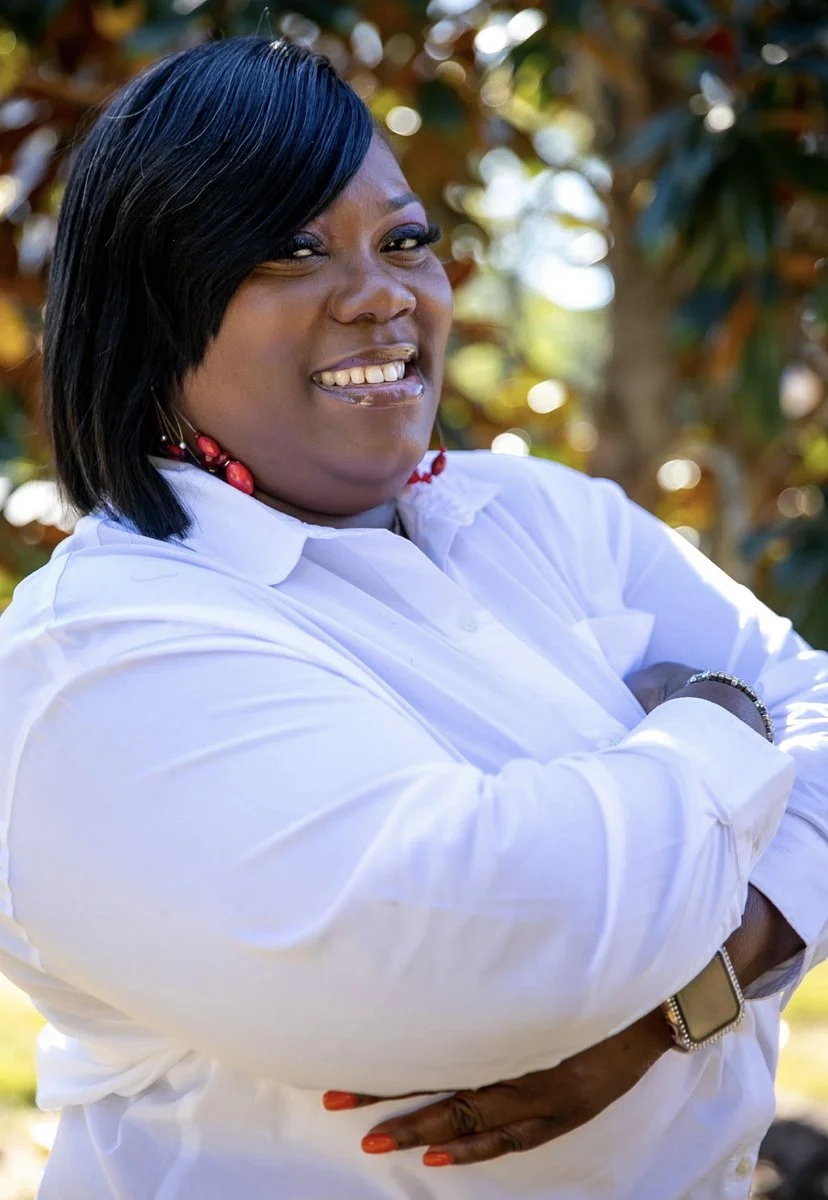 Online in Rhode Island
Natashia Bobbitt
She/HerBlack and queer communities, identity and intergenerational trauma
Natashia supports teens, adults, elders, and families navigating cultural displacement, grief, caregiving, neurodivergence, gender, trauma, and complex relationships. She brings African American, Canadian, and Black diasporic perspectives into work that can move among conversation, family patterns, the body, creativity, and practical support.
Ways of working
Meet Natashia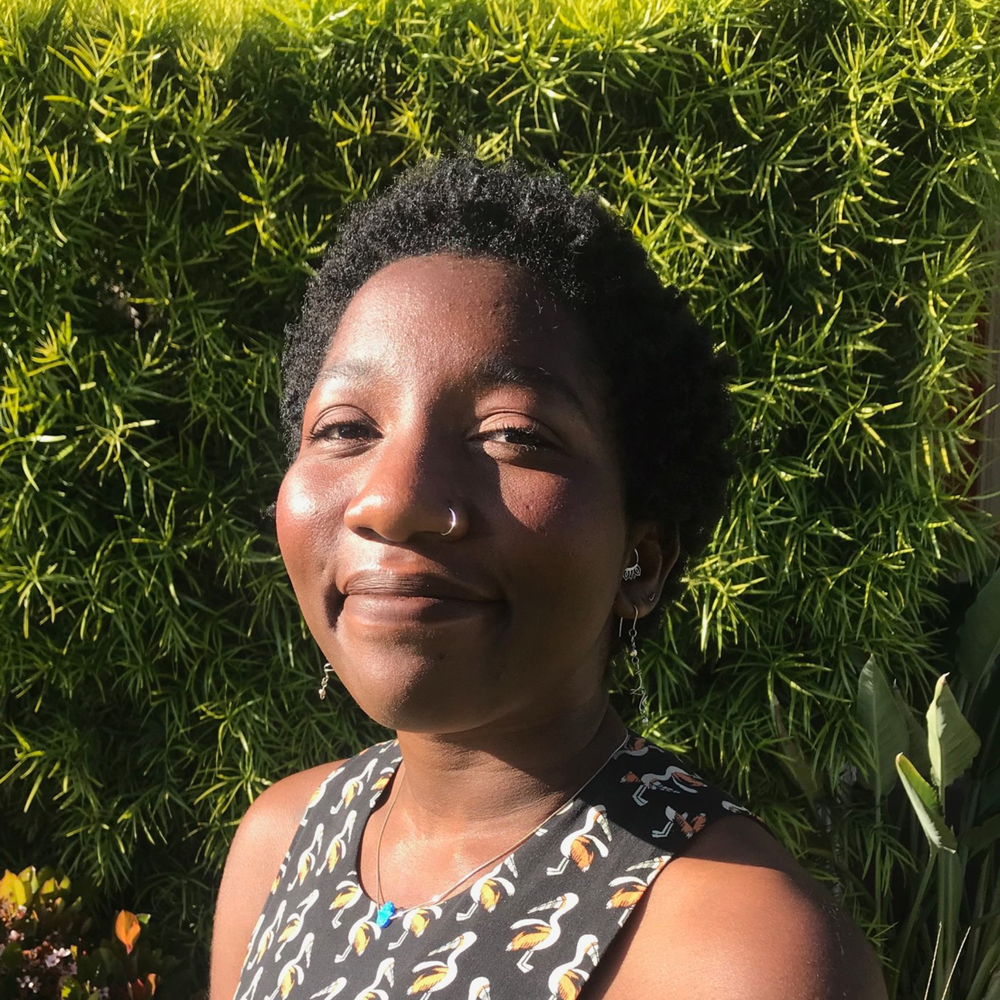 Online in Massachusetts & Pennsylvania
Saphir Allen Davis
They/ThemExpressive arts, identity, trauma and belonging
Saphir works with Black, queer, trans, neurodivergent, disabled, and chronically ill clients whose experiences may live beyond ordinary clinical language. Their approach treats creativity, imagination, nature, rest, and relationship as meaningful resources for processing identity-based harm, displacement, grief, and survival.
Ways of working
Meet Saphir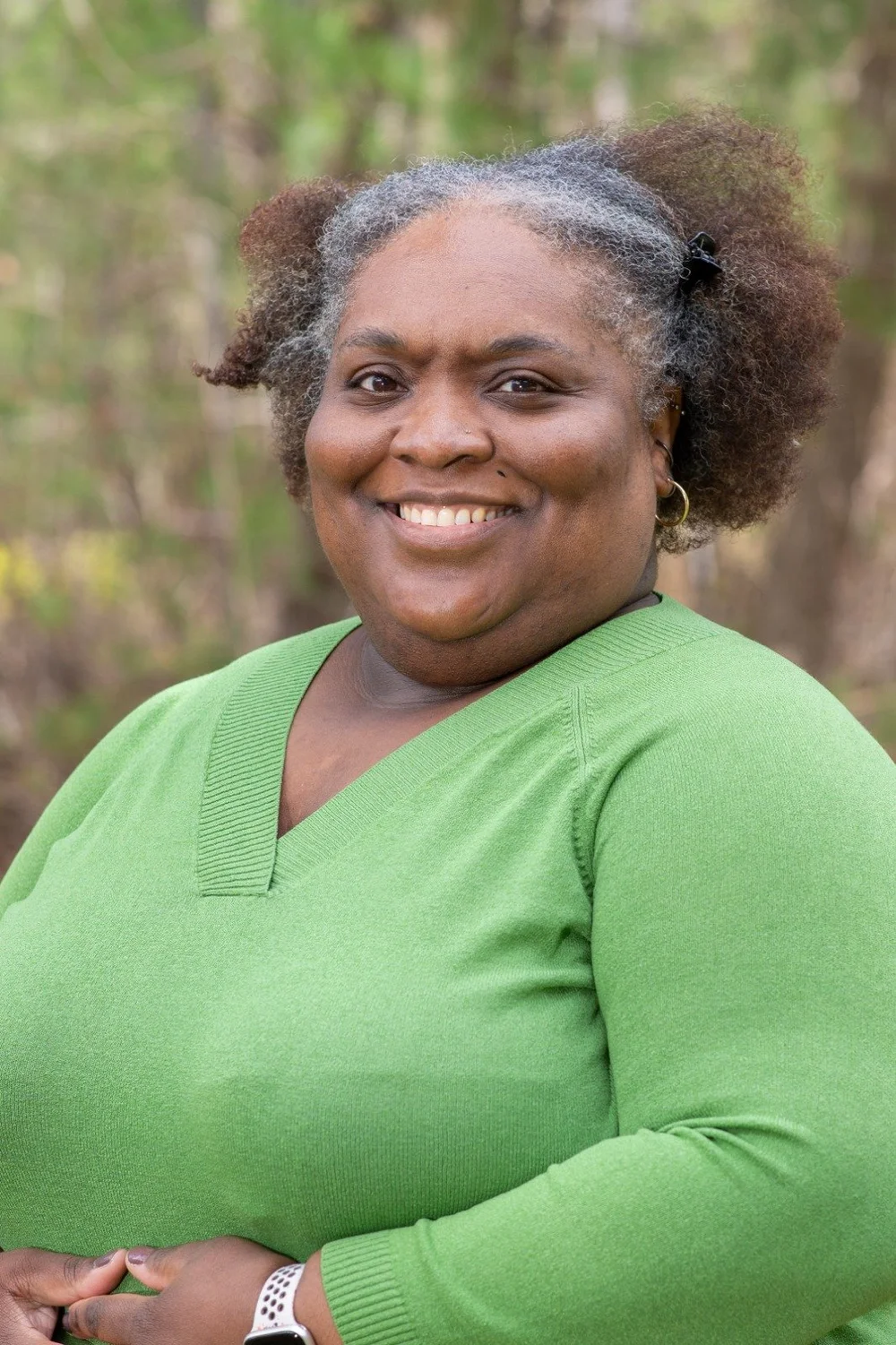 Online in Rhode Island
Alishia Jennings
She/HerGrief, chronic illness, caregiving and first-generation life
Alishia works with adults carrying grief, disability or chronic illness, role overload, caregiving, queer identity, and the pressure of being first in a family to navigate unfamiliar institutions. She keeps healthcare, racism, ableism, fatphobia, economic realities, family, and changing bodies inside the conversation.
Ways of working
Meet Alishia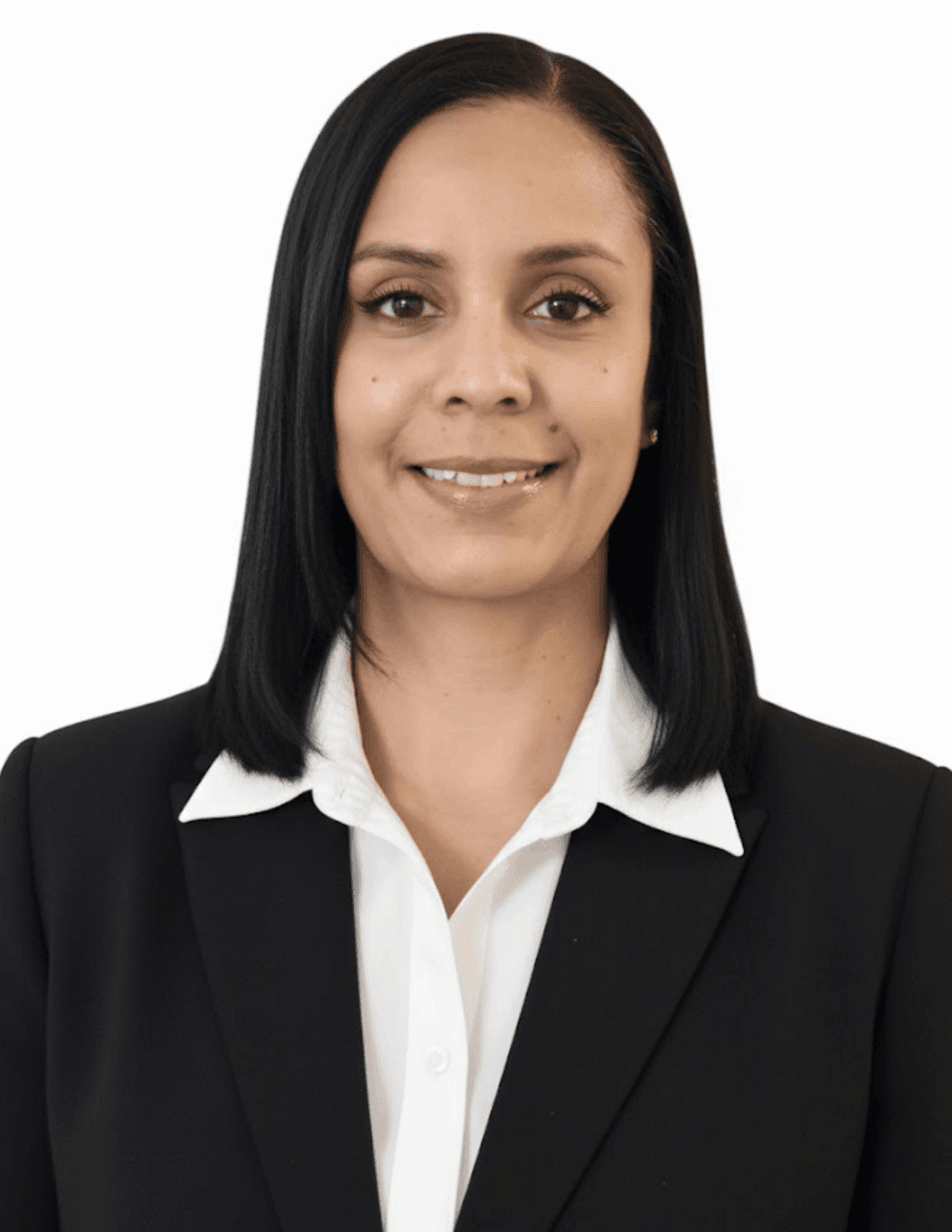 Online in RI, GA & MA · English & Spanish
Ana Mena
She/HerBilingual therapy for immigrants, refugees and LGBTQ+ communities
Ana brings personal knowledge of migration from the Dominican Republic alongside clinical work with transition, identity, unfamiliar systems, discrimination, and belonging. Her English- and Spanish-language practice is relational and attachment-based, with room for culture, creativity, family, gender, sexuality, and immigration history.
Ways of working
Meet Ana Online in Virginia
Katrina Williams
She/HerRelationships, cultural identity, faith and family transitions
Katrina supports LGBTQ+ adults, couples, and families navigating relationships, parenting, perinatal change, religious trauma, cultural identity, and life between different worlds. Her work connects practical skills with attachment, emotion, family roles, and the social expectations people have been asked to carry.
Ways of working
Meet Katrina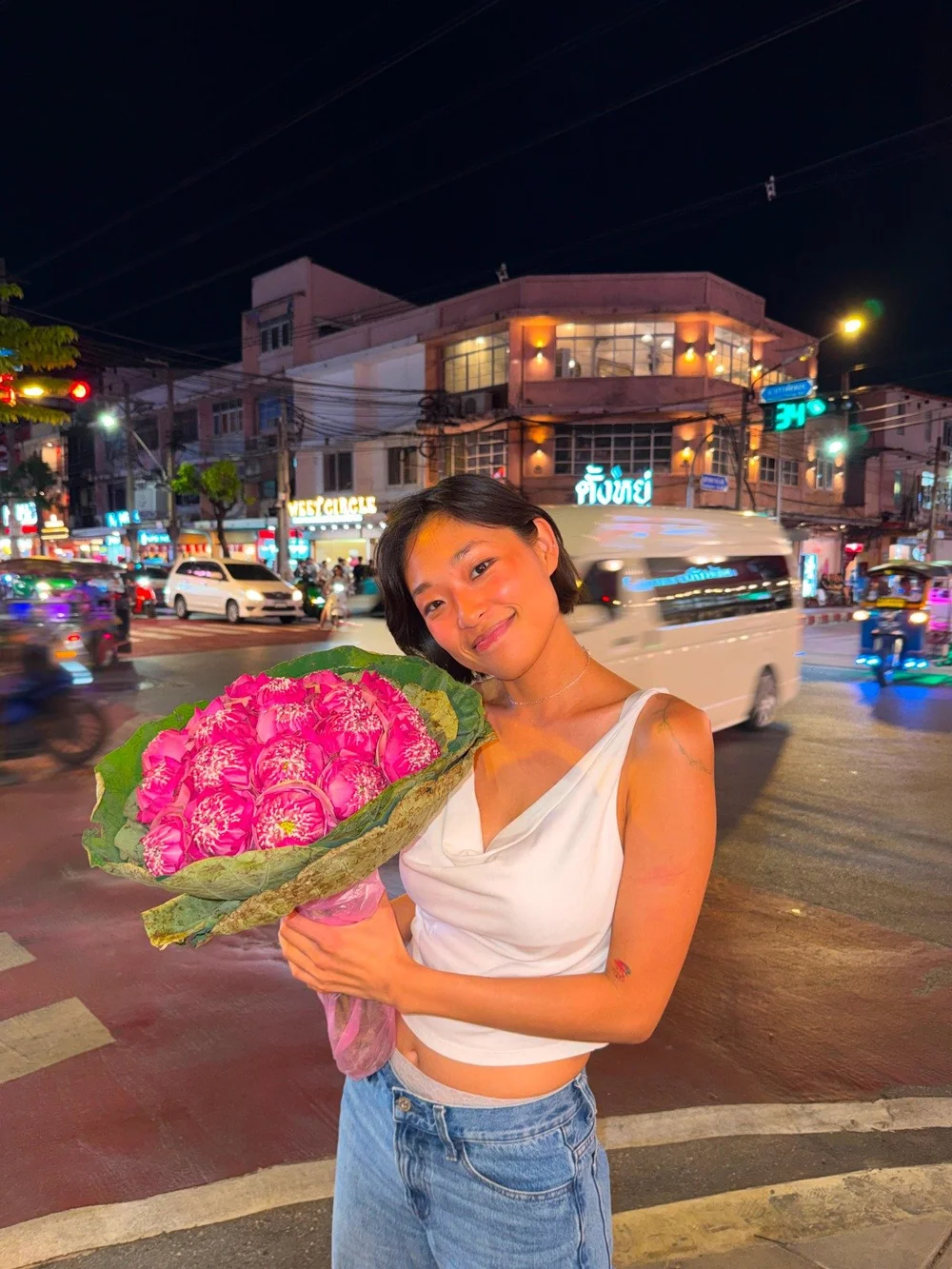 Online in Massachusetts · English & Mandarin
Shannon Kang
She/HerThird-culture identity, institutional harm and life beyond survival
Shannon works with immigrants, third-culture people, international students, veterans, activists, and queer, trans, neurodivergent, and disabled adults. Her practice examines inherited expectations, cultural dislocation, moral injury, institutional harm, and the relationships between personal distress and systems built around discipline or survival.
Ways of working
Meet ShannonShowing 1–2 of 7
Find therapy in your state
Online therapy for racial trauma, migration and belonging across multiple states.
Your therapist must be licensed or otherwise authorized to practice where you are physically located during each session. Choose your state to explore clinicians who may be able to work with you.
Showing 1–3 of 14
Some clinicians may hold licenses in additional states. Share your location and our team will explain any options currently available.
Questions before beginning
Frequently asked questions.
Clear answers about racial trauma, migration, cultural identity, finding a therapist, and accessing care.
Do I need a formal diagnosis?
No. Racial trauma, migration stress, cultural grief, and questions of belonging do not need to fit a diagnostic category before they can be discussed in therapy.
Do I need to have experienced an obvious racist incident?
No. Harm can accumulate through repeated exclusion, surveillance, stereotyping, tokenization, institutional barriers, family histories, public events, and the expectation that you remain prepared for what may happen. You can seek support even when no single event explains everything you are carrying.
Can therapy remove the effects of racism?
Therapy cannot eliminate racism or replace political, community, legal, workplace, or material change. It can offer space to understand the impact, process grief and anger, reconnect with your own judgment, develop support, and make decisions with greater clarity.
Will my therapist treat my culture or family as the problem?
Our aim is to understand relationships in context. Culture and family can carry love, knowledge, survival, obligation, conflict, and harm at the same time. Therapy can examine these complexities without assuming that distance or individual independence is always the healthiest outcome.
Can therapy help if I was born here but my family migrated?
Yes. Children and grandchildren of immigrants may carry language loss, family expectations, cultural responsibility, intergenerational grief, pressure to succeed, and complicated questions about home and belonging.
Do you work with third-culture and diasporic clients?
Yes. Some Phoenix Rising therapists work with people whose lives span countries, cultures, languages, and communities. Matching depends on your location, the therapist's experience, and current availability.
Do you work with queer and trans immigrants?
Yes. Our work can hold the intersections of migration, racism, family, gender, sexuality, faith, healthcare access, chosen family, and community belonging without separating one part of your life from another.
Can therapy include religious or spiritual identity?
Yes. Faith and spiritual practice may be sources of care, meaning, memory, community, conflict, or harm. Therapy can explore your relationship with them without assuming that healing requires abandoning or returning to a particular belief system.
Can I request a therapist who shares my race or culture?
Yes. Tell us which identities or lived experiences matter to you. Shared identity does not automatically create safety, and we cannot guarantee every requested match, but we will take your preferences seriously and explain the available options.
What if English is not my first language?
Language availability varies by therapist. Include the language you prefer on the matching form, and our team will confirm whether a suitable clinician or communication option is currently available.
Can family members or partners join therapy?
Possibly. Some clinicians offer partner or family work depending on their training, scope, state authorization, and availability. Tell the matching team who hopes to participate and where each person will be physically located.
Do you provide immigration evaluations or letters?
Not every therapist provides evaluations, documentation, or immigration-related letters. Include this request on the matching form so the team can confirm whether an appropriate service is available. Therapy does not replace advice from a qualified immigration attorney.
Can I talk about immigration status or legal uncertainty?
Yes. Immigration status and legal uncertainty can affect safety, work, housing, family, healthcare, and the choices available to you. Therapists do not provide legal advice. Ask your therapist to explain confidentiality and its legal limits before sharing information you are concerned about documenting.
Is therapy available online?
Yes. Phoenix Rising provides online therapy to eligible clients in Virginia, Rhode Island, Massachusetts, Colorado, and Georgia. Some clinicians may also be authorized in additional states.
Is in-person therapy available?
Phoenix Rising services are primarily provided online. In-person availability may change, so ask the matching team about current options when you inquire.
Do you accept insurance?
Some therapists accept insurance, while others provide private-pay services. Participation depends on the clinician, state, service, and insurance plan. We will explain the available options before you schedule.