

PROVISIONALLY LICENSED CLINICAL SERVICE WORKER
Alishia Jennings
Rhode Island Therapist for Grief, Chronic Illness, LGBTQIA+ Identity & Caregiving
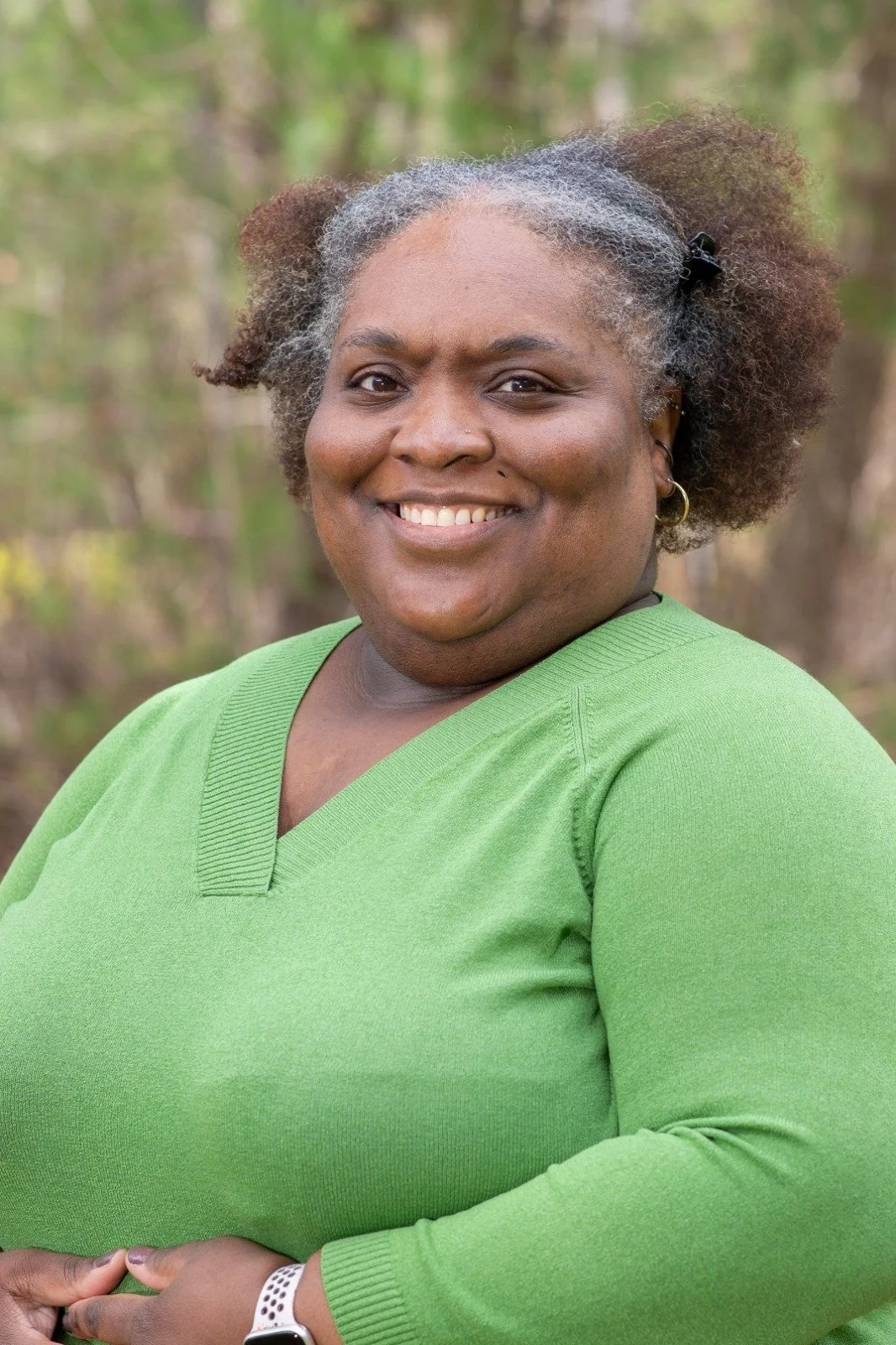








Pronouns: She/Her
Licensure: Provisionally Licensed Clinical
Service Worker
Location: Rhode Island
Languages: English
Accepting New Clients: Limited Availability
Sliding Scale: To be confirmed
Insurance: Aetna, Harvard Pilgrim, Tufts, Optum, UHC, RI Medicaid, BCBS RI, Neighborhood Health Plans
I work with adults across the lifespan who are carrying grief, chronic illness, caregiving responsibilities, identity questions, anxiety, and the exhaustion that can come from having too much to hold for too long.
My work is especially informed by disability justice, gender-affirming care, and an understanding that emotional distress does not develop separately from our relationships, communities, healthcare systems, economic realities, or identities.
I want therapy to be somewhere we can look at the whole picture without treating you as the problem that needs fixing.
About Alishia
Hello! My name is Alishia, and I look forward to working with you.I come to this relationship knowing that no one understands you and the challenges you face better than you. You are the expert on your own person, and I am here to help you grow.
Prior to joining Phoenix Rising Centers, my work has been exclusively in inpatient mental health. From adolescence to older adulthood, I support and advocate for the individuals I work with. We face uncertainty every day and that can be overwhelming and debilitating. You may feel stuck and I want to help you free yourself.
My areas of focus include first-generation and unconventional undergraduate and graduate students, role transitions and role overload, caregiver stress, living with disability and chronic illness (whether your own or a loved one), and navigating life in the LGBTQIA+ community. I also work with individuals coping with all shades of grief and loss.
The therapy modalities that I use are Acceptance and Commitment Therapy (ACT); Cognitive Behavioral Therapy (CBT) and Dialectical Behavioral Therapy (DBT). I believe you have to be willing to accept and honor your pain and change your approach to manage it. I strive to be the type of therapist that I once sought for myself: compassionate but honest, nurturing but firm.
As I get to know you, you may want a few details about me. I moved to RI in 2000 for college (I’m first-generation from Florida) and fell in love with Providence. I now live in the area with my wife and our two cats. I am trying to get back into my knitting, want to improve my sewing, and get an orchid to re-bloom.
Take Care of yourself. Be your own Dream Keeper.


Specialties
ALZ and other Dementias
Social Anxiety
Grief or Loss
Highly Sensitive individuals
Socioeconomic Inequality
LGBTQIA+ and sexuality

Areas of Focus
Gender-Affirming care
Disability Justice
Healthcare Workers

Modalities
Acceptance and Commitment Therapy (ACT)
Cognitive Behavioral Therapy (CBT)
Dialectical Behavior Therapy (DBT)

Lived Experience
and Perspective
African American/Caribbean
Fat Person
Highly Sensitive
Bisexual with a Chronic Illness
A new convert to Judaism
Why I Do This Work
I spent much of my career before Phoenix Rising working in inpatient mental health. That meant meeting people during moments when life had become too much to carry in the ways they had been carrying it.
What stayed with me was how rarely those moments made sense when you looked only at a diagnosis.
There was usually much more happening. Grief. Disability. Caregiving. Financial pressure. A relationship changing. A body becoming less predictable. Being queer in a family or community where that carried consequences. Trying to get through school while being the first person in your family to navigate it. Growing older in a culture that often treats dependence as failure.
I became a therapist because I wanted more room for those conversations.
I also know personally what it is like to move through the world with identities and experiences that healthcare and mental health systems do not always understand well. That matters to how I practice. I do not assume that distress exists separately from racism, fatphobia, ableism, homophobia, economic inequality, or the ways institutions decide whose pain gets believed.
I want to offer the kind of relationship I once hoped to find myself: compassionate without being vague, honest without being harsh, and willing to sit with complexity instead of rushing toward an answer.
- Alishia Jennings 
My Approach in Practice

I come into therapy assuming that you know your life better than I ever could.
That does not mean we will never challenge anything. We probably will. But I want to understand why something developed before deciding it needs to disappear.
Maybe avoiding conflict has helped preserve relationships that mattered to you. Maybe being constantly prepared became important because instability had real consequences. Maybe caregiving has taken up so much of your identity that you are no longer sure where your responsibilities end and you begin. Maybe anxiety is tangled up with a healthcare experience, financial reality, disability, discrimination, or years of having to anticipate other people.
Context changes the conversation.
I use Acceptance and Commitment Therapy (ACT), CBT, and DBT, but I think of them as tools rather than a formula. We might work on making more room for an emotion that cannot simply be solved, questioning a belief that has been organizing your life, practicing a different way of responding when things become overwhelming, or getting clearer about what actually matters to you underneath everyone else’s expectations.
I tend to be nurturing, but I am also direct. I am not interested in pretending something is easy when it is not.
The work is about helping you have more room to choose how you want to live, especially in places where life may have taught you that you did not have very many choices.
What Clients Often Come to Me For
People often reach out when life feels heavy, layered, or difficult to put into words.
Grief That Doesn’t Fit Neatly Into “Stages”
Death is only one kind of loss. I work with grief connected to relationships, changing health, disability, caregiving, identity, aging, anticipated loss, and lives that did not unfold the way someone expected.
Chronic Illness, Disability & Changing Bodies
Living with illness or disability can affect relationships, work, independence, identity, sexuality, money, and the way other people respond to you. Therapy should be able to hold all of that without treating the body as something you simply need to overcome.
Caregiver Stress, Dementia & Role Overload
Caring for someone with Alzheimer’s disease, dementia, chronic illness, or disability can bring love, resentment, grief, exhaustion, tenderness, guilt, and uncertainty into the same room. We can make space for those contradictions without asking you to become endlessly self-sacrificing.
LGBTQIA+ Identity, Sexuality & Gender-Affirming Care
I work with people exploring sexuality, identity, relationships, belonging, and the complicated experience of moving through families, workplaces, faith communities, and healthcare systems that may not always make room for who you are.
Social Anxiety & Highly Sensitive People
Sensitivity is not automatically something to eliminate. We can look at what overwhelms you, what environments ask too much, what you notice that others may miss, and where anxiety has begun limiting the kind of life or relationships you want.
Life Transitions, First-Generation Experiences & “Too Much at Once”
Graduate school. Career changes. Aging. Becoming a caregiver. Leaving a role you have occupied for years. Being the first in your family to enter a particular institution. Sometimes the difficulty is not one enormous event. It is the accumulation of responsibilities, expectations, and transitions without enough room to process what they are asking of you.
Our work focuses on making sense of what you have lived through while supporting you in building clarity, resilience, and self-trust in ways that fit your life and values.