

Online therapy across multiple states
Online Polyamory, Kink & Relationship Therapy
Care for polyamorous, open, kinky, queer, and nontraditional relationships, without treating your relationship structure as the problem.
You may be navigating jealousy, changing agreements, sexual disconnection, conflict, shame, or a relationship transition. You may also want a therapist who understands consensual non-monogamy, kink, power exchange, and chosen family before the conversation begins.
Care without assumptions
You should not have to teach your therapist the basics first.
Polyamorous, kinky, queer, and nontraditional relationships are often judged before the actual concern is even heard. Therapy can become another place where people are asked to defend the relationships they have chosen.
Your relationship does not need to look conventional to deserve care.
The commitments, agreements, and forms of intimacy you build can be approached with curiosity and respect, rather than measured against marriage, exclusivity, or a single model of partnership.
Jealousy has context
Jealousy can hold fear, attachment, past harm, power, scarcity, or a need for reassurance. It does not automatically mean non-monogamy is failing.
Kink is not a symptom
Kink and power exchange should not be assumed to be evidence of trauma, dysfunction, or harm without listening to the people involved.
Structure is not the whole story
We can talk about conflict, trust, desire, boundaries, and accountability without reducing everything to relationship structure.
Consent lives in relationships
Care can attend to consent, communication, power, repair, bodily autonomy, and the conditions that make meaningful choice possible.
We begin with curiosity about the relationships you have built and the conditions surrounding what brought you here.
What we support
Relationship care that holds the whole context.
Relationships are shaped by more than communication skills. They are shaped by history, power, care work, resources, culture, bodies, safety, community, and what each person has had to do to survive.
The work can draw from relational, somatic, narrative, sex-positive, and systems-aware perspectives, depending on what would be useful to you.
Relationships and the world around them
Every relationship exists inside a larger world.
What feels possible in a relationship is shaped by more than personality or communication style. The conditions around people can affect safety, belonging, recognition, care, privacy, and who is expected to carry the most.
Laws and recognition
Marriage law, family policy, immigration status, custody, and healthcare systems can determine whose relationships are recognized and whose are made precarious.
Money, housing, and care work
Economic dependence, housing, disability, caregiving, and access to resources shape what someone can negotiate, leave, disclose, or ask for.
Culture, faith, and family
Ideas about respectability, loyalty, gender roles, sexuality, and partnership are carried through families, communities, faith traditions, and histories.
Safety and social power
Race, gender, transness, queerness, class, disability, and past harm can affect whose needs are believed, whose anger is feared, and who has room to say no.
These conditions can show up in intimate moments.
Therapy can make space for the questions that are often treated as private personality problems, even when they are shaped by larger patterns of power and survival.
- Who is considered the “real” partner?
- Whose jealousy receives the most attention?
- Who has housing, money, or legal protection?
- Who is expected to provide care?
- Who can leave safely?
- Whose needs are described as “too much”?
Making room for complexity
Love and struggle can exist in the same relationship.
Seeking therapy does not mean polyamory failed. Jealousy does not make you bad at non-monogamy. Conflict does not automatically mean a relationship must end.
Care can be real, and something can still need attention.
People can care deeply for one another and still struggle with communication, trust, capacity, time, money, sex, disability, family pressure, or competing needs. Therapy helps slow the situation down enough to understand what is happening and make choices with greater clarity.
Repair
Making room for accountability, honest communication, changed behavior, and rebuilding trust after a rupture or broken agreement.
Renegotiate
Revisiting roles, boundaries, agreements, care arrangements, time, intimacy, and what each person can genuinely sustain.
Release
Recognizing when an agreement or relationship cannot continue in its current form, while moving through endings with care and dignity.
Therapy does not decide the answer for you. It can support choices that remain connected to your agency, your relationships, and the realities you are living with.
Who we work with
There is more than one way to be here.
You do not need the perfect label, a settled relationship structure, or a ready-made explanation before reaching out.
01 Exploring relationship structure
Therapy can be a place to think with care about the kinds of relationships, commitments, and networks that fit your life.
- Polyamory or consensual non-monogamy
- Open relationships
- A polycule or wider relationship network
- A new partner or metamour relationship
- Separating, uncoupling, or changing a relationship
- Co-parenting in or beyond romantic partnership
02 Kink, desire, and intimacy
Desire, power, boundaries, and intimacy deserve room for nuance. They are not problems to solve through shame or a single idea of what is “normal.”
- Kink, BDSM, or power exchange
- Different levels of desire or sexual interest
- Sexual or relational trauma
- Renegotiating intimacy around disability or illness
- Changes in pleasure, capacity, or connection
- Questions about safety, disclosure, and boundaries
03 Conflict, change, and repair
Conflict is rarely only about communication. It can hold history, unequal risk, unmet needs, competing responsibilities, grief, and the pressure of trying to make something work.
- Jealousy, comparison, or fear of abandonment
- Revisiting agreements after a rupture
- Communication across different neurotypes
- Family pressure or community expectations
- Shifts in trust, time, money, or care work
- Finding a path forward without rushing the answer
04 Identity, belonging, and being understood
Your relationships do not exist apart from your body, culture, gender, disability, race, faith, immigration story, or the communities that have shaped what safety and belonging mean to you.
- Queer, trans, asexual, aromantic, or questioning
- Disabled, chronically ill, or neurodivergent
- Making sense of cultural or religious messages
- Looking for care that honors chosen family
- Seeking support without educating your therapist first
- Questioning what relationship structure feels right
You can come to therapy while you are still figuring things out. Uncertainty is allowed here.
Ways to begin
Come alone, together, or with your people.
Support can begin with one person, two partners, or more people within a relationship network. The right format depends on what you are navigating and on clinician fit and availability.
Let us know who hopes to participate when you complete the matching form. We will help identify what may be possible based on clinician experience, scope, and current availability.
Tell us what support you needMeet our therapists
Find a therapist who can meet the relationship you actually have.
You should not need to edit out the people, commitments, desires, or histories that matter to you in order to receive care.
Our clinicians bring different areas of experience. Many are poly-informed, kink-aware, queer-affirming, and trauma-trained, though not every therapist provides sex therapy or works with every relationship configuration. Tell us what feels important, including relationship structure, power dynamics, identity, culture, disability, or the kind of support you are seeking. We will help you find the most appropriate available fit.
Share what matters to youMeet our therapists
Different lenses for relationships that do not fit one mold.
Each therapist brings a different relationship to identity, culture, trauma, communication, and community. Explore their profiles to find the perspective and way of working that feels most relevant to your life.
 Online in Virginia
Katrina
She/HerRelational therapist for adults, couples and families
Katrina works with LGBTQIA+ adults, couples, and families around communication, trust, family conflict, identity, religious trauma, and transition. Her warm, collaborative approach considers the relationships, communities, and histories surrounding what people carry.
Explore Katrina’s approach Online across multiple states
Sohil
He/HimNeurodivergent, identity and relationship therapist
Sohil supports neurodivergent adults exploring communication, boundaries, cultural expectations, identity, family relationships, and major change. His work makes space for inherited stories and survival patterns without reducing them to personal failure.
Explore Sohil’s approach Online in Massachusetts
Shannon
She/HerQueer, neurodivergent and culturally responsive therapist
Shannon works with queer, trans, neurodivergent, disabled, immigrant, and third-culture adults. Her approach considers how family, culture, institutions, power, and inherited expectations shape intimacy, belonging, and the choices that feel available.
Explore Shannon’s approach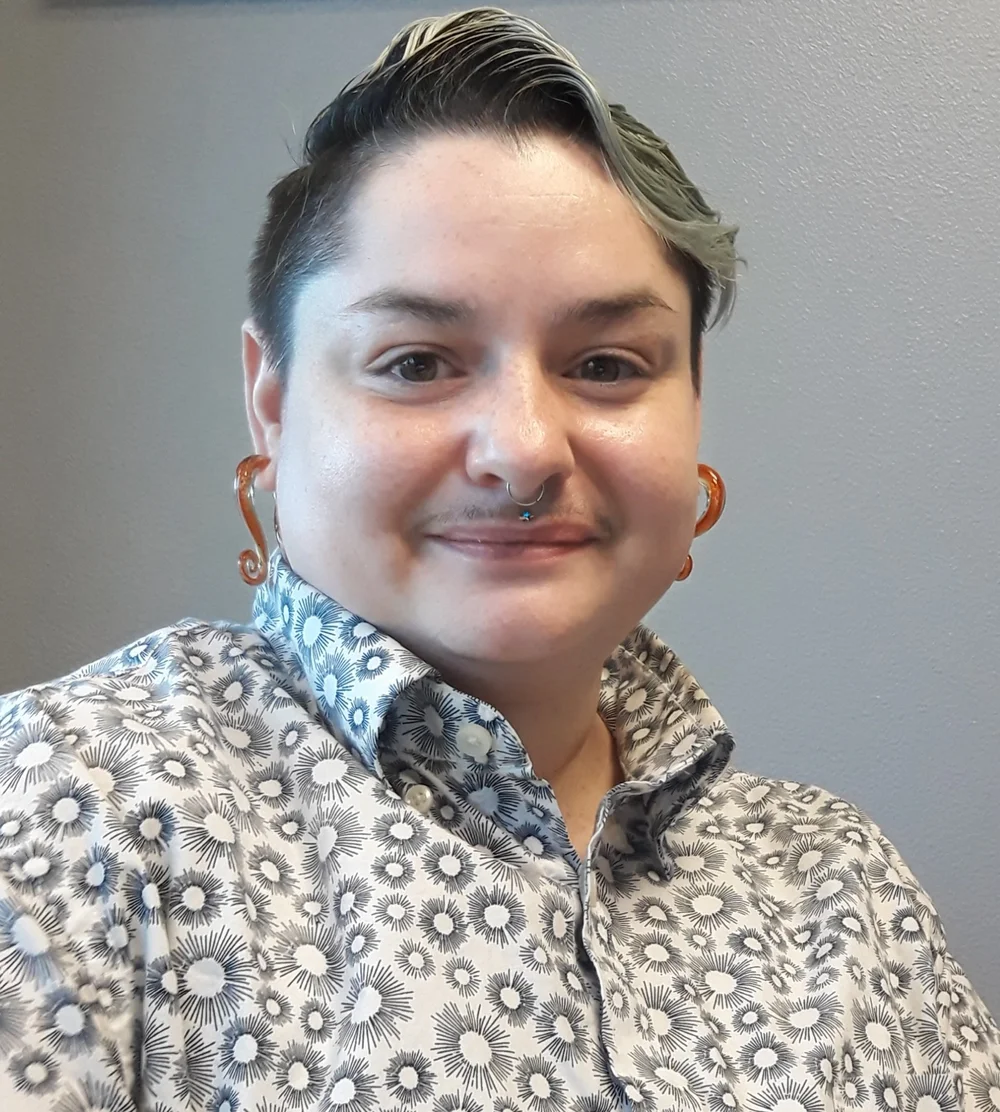 Rhode Island · Nevada
Orion
Hir/ZeQueer, trans, polyamory and kink-affirming therapist
Orion supports queer, trans, polyamorous, kinky, and non-monogamous clients navigating sexuality, trauma, disability, shame, relationship structures, and life beyond survival. Hir work centers self-determination, consent, and community.
Explore Orion’s approach Online across multiple states
Isaac
He/HimRelationship, trauma and men’s mental health therapist
Isaac works with unconventional relationships, including polyamory and ethical non-monogamy, sex and relationship concerns, trauma, family dynamics, and men’s mental health. He brings curiosity, attachment work, nonviolent communication, and community experience into the room.
Explore Isaac’s approachYou do not have to choose alone. Tell our matching team about your relationship structure, identities, location, access needs, and what you want support with. We will help identify the most relevant available therapist.
Help me find a therapistWhere we provide care
Online relationship therapy across multiple states.
Your therapist must be authorized to practice in the state where you are physically located during each session. If partners join from different states, tell us each person's location when you inquire.
Joining from somewhere else?
Some Phoenix Rising therapists hold licenses in additional states. Share where each person will be located, and our matching team will confirm whether a therapist can work with everyone involved.
Questions before beginning
Frequently asked questions.
Clear answers about relationship structure, who can attend, therapist experience, location, safety, and payment.
Do we have to be polyamorous to work with you?
No. We work with people practicing, considering, or questioning polyamory, open relationships, and other forms of consensual non-monogamy. We also support monogamous people whose relationships, identities, or desires fall outside conventional expectations.
Will a therapist tell us whether to be monogamous or polyamorous?
Your therapist will not choose a relationship structure for you. Therapy can help everyone examine what they want, what agreements are genuinely possible, where pressure or unequal risk may be present, and whether the arrangement is workable for the people affected.
Do all partners need to attend?
No. You can attend individually to explore jealousy, kink, intimacy, identity, boundaries, or relationship decisions. If you are seeking relationship therapy, your therapist will discuss who should participate and how the work can be structured.
Do you work with queer and trans relationships?
Yes. Phoenix Rising works extensively with queer, trans, and gender-expansive communities. We understand that relationships can be shaped by chosen family, community ties, healthcare access, discrimination, and forms of commitment that institutions do not always recognize.
Do you work with neurodivergent relationships?
Yes. Some clinicians work with ADHD, autistic, and AuDHD clients, including relationships involving different neurotypes. Sessions may address communication, sensory boundaries, transitions, emotional regulation, division of labor, intimacy, and repair after misunderstandings.
Can more than two partners attend therapy?
Some therapists may work with three or more people, depending on their training, scope, state authorization, and availability. Include the number of participants and everyone’s physical location when completing the matching form.
Is polyamory the same as cheating?
Polyamory and consensual non-monogamy involve the knowledge and consent of the people affected. Agreements can still be broken within any relationship structure. Therapy can make room for secrecy, betrayal, consent, accountability, and repair without treating monogamy as protection from harm.
Can therapy help with jealousy?
Yes. Jealousy may hold fear, grief, anger, longing, comparison, or information about an unmet need. Therapy can explore what is intensifying it, including past betrayal, agreements, time, communication, material dependence, or fear of losing an important relationship.
Can you help with differences in desire?
Yes. Desire can be shaped by stress, medication, hormones, trauma, disability, chronic illness, sensory needs, conflict, body image, caregiving, and changing capacity. Therapy can support honest conversation without making anyone responsible for providing or performing sex.
What if there is abuse or coercion in the relationship?
Tell us if you are concerned about coercion, retaliation, stalking, violence, or your ability to participate safely. Relationship therapy may not be appropriate when someone cannot speak or choose freely. Our team can help consider a safer form of support or referral.
What does kink-aware therapy mean?
A kink-aware therapist understands that kink and BDSM can be consensual parts of sexuality, identity, intimacy, community, and relationship life. Kink is not automatically interpreted as a symptom, a trauma response, or evidence that something is wrong with you.
Are your therapists certified sex therapists?
Not every clinician is a certified sex therapist. Some therapists have experience discussing sex, desire, kink, trauma, and intimacy without holding a separate sex-therapy certification. Tell us what kind of support you want so we can identify an appropriate match.
Do you work with sexual trauma?
Some of our therapists specialize in sexual violence, coercion, relational trauma, and body-based healing. This work does not assume that consensual kink or non-monogamy caused the harm. We look carefully at consent, choice, power, safety, and what happened in context.
What if partners live in different states?
A therapist generally needs legal authorization to work where each participant is physically located during the session. Share every participant’s state on the matching form so we can determine whether an appropriate therapist is available.
Is therapy available online?
Yes. Phoenix Rising provides online therapy to eligible clients across Virginia, Rhode Island, Massachusetts, Colorado, and Georgia. Some clinicians may also be authorized to practice in additional states.
Is in-person therapy available?
Phoenix Rising’s services are primarily provided online. In-person availability may change, so ask the matching team about current options when you inquire.
Do you accept insurance?
Some therapists accept insurance, while others provide private-pay services. Participation depends on the therapist, state, service, and plan. Insurance coverage for relationship therapy also varies. We will explain the available options before you schedule.