

PROVISIONALLY LICENSED CLINICAL SOCIAL WORKER
Mathew Ryan Freimuth
Autistic-Affirming Therapist for Trauma & Substance Use Recovery in Rhode Island
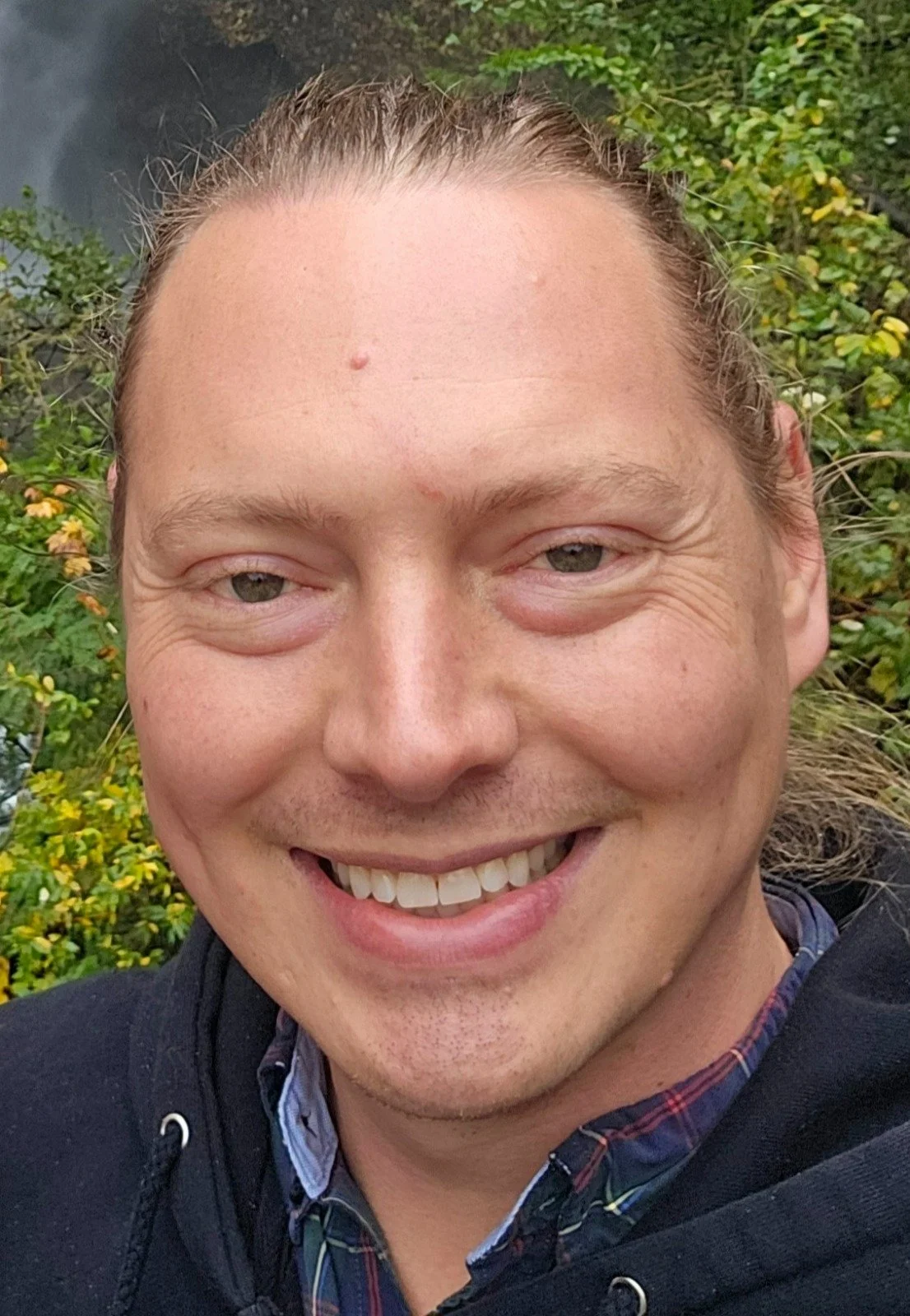







Pronouns: He/Him
Licensure: LCSW
Location: Rhode Island
Languages: English
Accepting New Clients: Yes
Sliding Scale: Yes
About Mathew
Mathew Freimuth (he/him) is a licensed clinical Social worker who has lived all around the United States but is now happy to call Rhode Island home. He came into this work through his lived experience of being in recovery from substance use and mental illness, as well as his experience in engaging in anti-racist organizing and working with formerly-incarcerated individuals in Louisiana, Massachusetts, and Rhode Island. He utilizes somatic approaches, as well as culturally-sensitive mindfulness practices and frameworks that incorporate mindfulness, such as acceptance and commitment therapy, dialectical behavior therapy. He lives in Providence with his partner and three cats.


Specialties
Addiction, especially alcohol and other drug use
Autism spectrum
Bipolar patterns
Children of parents with addiction; Criminal justice system
Depression
Dual diagnosis
Co-occuring disorders
Gender identity
Queer
Political and climate stress
PTSD
Trauma
Mindfulness and Meditation

Areas of Focus
Abolitionism
Autistic Person
Decolonization
Decoloniality
Disability justice
Therapist for activists and healthcare workers

Modalities
Acceptance and Commitment Therapy (ACT)
Autistic-Affirming or Centered Therapy
Dialectical Behavioral Therapy (DBT)
Existential Therapy
Mindfulness-based stress reduction
Sensorimotor Psychotherapy
Somatic experiencing

Lived Experience
and Perspective
Autistic person
Cisgender
Disabled Person
Queer
Man
White
Bipolar Disorder
Recovery from Substance Use Disorder
Military family
Why I Do This Work
I came to this work through my own experiences with mental health, substance use, recovery, disability, and learning what it means to build a life that feels worth staying connected to.
I have also spent time organizing against racism and working alongside formerly incarcerated people. Those experiences taught me that suffering does not happen in isolation. What gets called a “symptom” can also be connected to trauma, exclusion, poverty, criminalization, ableism, racism, or simply trying to survive within systems that were never designed with you in mind.
I believe people deserve care that takes all of that seriously without reducing them to what has happened to them.
Therapy, for me, is a place to make room for complexity. We can work with what hurts while also noticing what has helped you survive, what matters to you, and what kind of life you want to keep building.
- Mathew Ryan Freimuth 
My Approach in Practice

I do not approach therapy assuming that I know what a meaningful or healthy life should look like for you.
We will start with what is actually happening in your life: what feels overwhelming, where you feel stuck, what your body has learned to protect you from, and what you want to be different.
My work is neurodivergent-affirming, trauma-informed, and grounded in curiosity rather than judgment. I draw from ACT, DBT, existential therapy, mindfulness, Sensorimotor Psychotherapy, Somatic Experiencing, and autistic-centered approaches. These are tools, not rules. We will use what is useful and leave behind what is not.
Because I have lived experience with autism, bipolar disorder, disability, and substance use recovery, I understand that change is rarely as simple as “making better choices.” Sometimes we need practical skills. Sometimes we need to understand the nervous system. Sometimes we need space to grieve, question what we have been taught, or imagine possibilities beyond the roles and systems we have inherited.
I want therapy to be somewhere you can bring your whole context with you, including your body, identity, politics, relationships, communities, and contradictions.
What Clients Often Come to Me For
People often reach out when they are trying to make sense of experiences that do not fit neatly into one diagnosis or one part of their lives.
Substance use, recovery & changing your relationship with coping
Whether you are in recovery, questioning your substance use, or trying to understand the role alcohol or other substances have played in surviving difficult experiences, we can approach it without shame or moral judgment.
Autistic & neurodivergent adults trying to live with less masking
You may be newly diagnosed, self-identifying, burned out from adapting to other people’s expectations, or trying to understand what support actually works for your brain and body.
Queer people navigating identity, belonging & gender
Therapy can be a place to explore identity, relationships, gender, community, and belonging without having to make yourself more understandable or acceptable to someone else.
Trauma, PTSD & nervous system overwhelm
When your body has learned to stay on alert, shut down, disconnect, or protect you in ways that no longer feel sustainable, we can work toward greater safety and choice without rushing the process.
People impacted by incarceration, criminalization & systems of punishment
If your life or family has been shaped by incarceration, surveillance, substance-use criminalization, or the criminal legal system, those experiences belong in the room too. I approach this work through an abolitionist lens rather than assuming punishment creates healing.
Bipolar experiences, depression & co-occurring mental health concerns
You may be trying to understand patterns in your mood, rebuild trust in yourself, or navigate the complexity of living with more than one diagnosis or mental health experience at once.
Political, climate & existential stress
Sometimes distress is a reasonable response to what is happening around us. Therapy can offer room to sit with fear, grief, uncertainty, and responsibility while finding ways to remain connected to meaning, community, and what you value.
People questioning the idea of “normal”
Disability, queerness, neurodivergence, recovery, and other lived experiences can put you in conflict with expectations about what a successful or acceptable life is supposed to look like. We can explore what becomes possible when those expectations are no longer the starting point.
Clients can expect unconditional acceptance, sincere support, and occasionally
a little tough love.