
CLINICAL INTERN
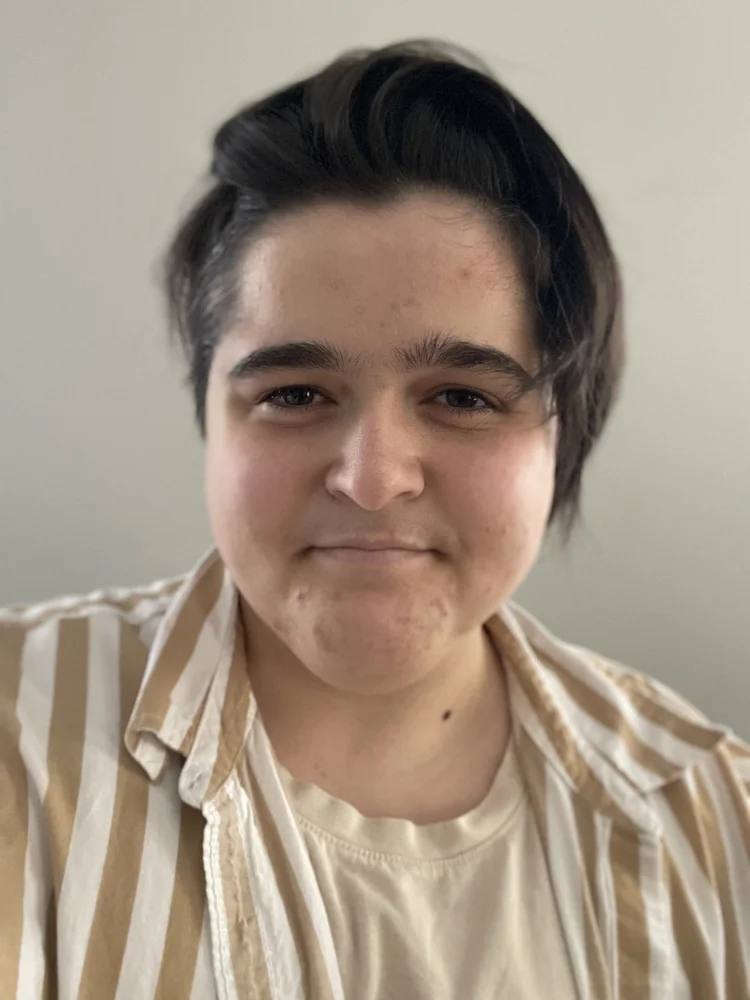
Caleb Dyhrberg
Therapy for Queer, Trans, Neurodivergent and Fat Teens and Adults
Collaborative virtual care for people navigating identity, burnout, anxiety, material stress and the transition into adulthood.
- Pronouns:
- He/They
- Licensure:
- Clinical Counseling Intern
- Location:
- CA, OR, WA, CO, VA, VT, MA, RI
- Accepting New Clients:
- Yes
- Languages:
- English
- Sliding Scale:
- Available
- Insurance:
- Cigna of RI; Aetna of RI, CO, CA, VA; Harvard Pilgrim; Tufts; Optum; United; RI Medicaid; Neighborhood Health Plans; BCBS RI & MA; Carelon of RI
About Caleb
Hello, welcome!

Who I am & how I work
My name is Caleb, and I’m glad you’re here. I’m a Clinical Intern here at Phoenix Rising Centers. I am white, trans-masculine, queer, neurodivergent, and fat. My identities, experience, and education help inform my therapeutic work. In my work, I am curious, non-judgemental, and keep in mind larger systems such as racism, sexism, ableism, diet culture, etc. I also offer compassion and mindfulness/grounding techniques when appropriate.
My therapeutic approach
I draw from elements of many different modalities, including ACT, narrative therapy, mindfulness-based, motivational interviewing, and parts work/IFS. I also bring in many frameworks tailored to each client, including Health at Every Size (HAES), fat liberation, feminist, anti-racism, cultural humility, queer theory, disability justice, trauma-informed, positive youth development, and strengths-based.
My experience & working together
Before joining Phoenix Rising Centers, I spent about six years working with youth and young adults experiencing mental health and housing crises. My clients have often been very low to no income and with a history of or actively open to the child welfare system. I have also helped folks gain access to state benefits, particularly as they transition into adulthood and independence. It is always a privilege to witness the transformations folks make as they progress through the difficult work of processing all that they are and want to become. This can look like exploring their identities, how they fit into systems like families or communities, feeling comfortable to unmask and/or stim, and so much more. Together, we can figure out what you’d like to tend to, and grow from there.
Specialties & approach
Swipe to explore. Open a card’s list to read more.
4 cards

Specialties
Support around queer identity, neurodivergence and life transitions.
View 5 specialties Close list
- Queer (gender & sexuality)
- Neurodivergence
- Life transitions (particularly into adulthood)
- Low income
- Child welfare involvement

Areas of Focus
Disability justice, queer liberation, feminism and fat liberation.
View 6 areas of focus Close list
- Disability justice
- Queer liberation
- Anti-racism
- Feminism
- Health at every size (HAES)
- Fat liberation

Modalities
Strengths-based, trauma-informed care with ACT, narrative therapy and parts work.
View 14 modalities Close list
- Strengths based
- Positive youth development (PYD)
- Trauma-informed
- Cultural humility
- ACT
- Narrative therapy
- Mindfulness-based
- Grounding skills
- Motivational interviewing
- Parts work
- IFS
- Curiosity
- Non-judgement
- Larger systems perspectives

Lived Experience
Perspectives shaped by being white, trans masculine, queer, neurodivergent and fat.
View 5 identities Close list
- White
- Trans masculine
- Queer
- Neurodivergent
- Fat
Why I Do This Work
I do this work because distress is too often treated like an individual failure.
Many people are trying to survive families, schools, workplaces, healthcare systems and communities that were never built around their bodies, minds, identities or material needs. Therapy should not ask you to become easier for those systems to manage.
Read my full statement Close full statement
Before joining Phoenix Rising Centers, I spent six years supporting youth and young adults experiencing housing instability, financial hardship, child welfare involvement and the transition into adulthood. That work taught me that care has to include the conditions people are living within.
Sometimes support means processing trauma. Sometimes it means understanding benefits, finding steadier ground, unmasking, stimming without shame or deciding which expectations no longer deserve your energy.
I want our work to help you understand what has kept you going, choose what you want to carry forward and build a life with more room for safety, connection, pleasure and self-direction.

My Approach in Practice
Our work starts with relationship.

Your life in context
I will not treat you as a diagnosis to correct, and I will not pretend anxiety, depression or burnout happen outside of family, housing, money, work, healthcare, discrimination and community.
What we bring to therapy
You bring knowledge of your own life. I bring curiosity, honesty, grounding, practical support and approaches including ACT, narrative therapy, parts work and IFS, mindfulness and motivational interviewing.
What we can explore
We may explore what a response has been protecting, what it costs you now and what could make daily life more workable. We can also talk directly about access, disability, body size, food, sensory needs, gender, race and power.
The goal is not to train you to tolerate conditions that are hurting you. It is to support your agency, relationships and ability to make choices that fit your actual life.
What Clients Often Come to Me For
People often come to me after being told the problem lives entirely inside them. They may be exhausted from masking, carrying shame, navigating complicated systems or trying to meet expectations that leave little room for their actual needs.
We can look at the emotional, relational and material parts together.
ADHD, Autism and Unmasking
Maybe you have spent years being told that you are too much, not trying hard enough or doing everyday life incorrectly. We can understand your sensory needs, attention, executive functioning, stimming and burnout without treating difference as failure.
Anxiety, Burnout and Shutdown
Overthinking, avoidance, numbness and exhaustion usually have a context. We can look at what your nervous system is responding to, which demands have become unsustainable and what steadiness could look like without expecting you to simply push through.
Queer and Trans Identity
You may be exploring your identity, moving through transition or trying to remain connected to yourself in.