

THERAPIST INTERN
Isaac Nemcek-Kranz
Therapist for Trauma, Men’s Mental Health, Relationships & Feeling Stuck
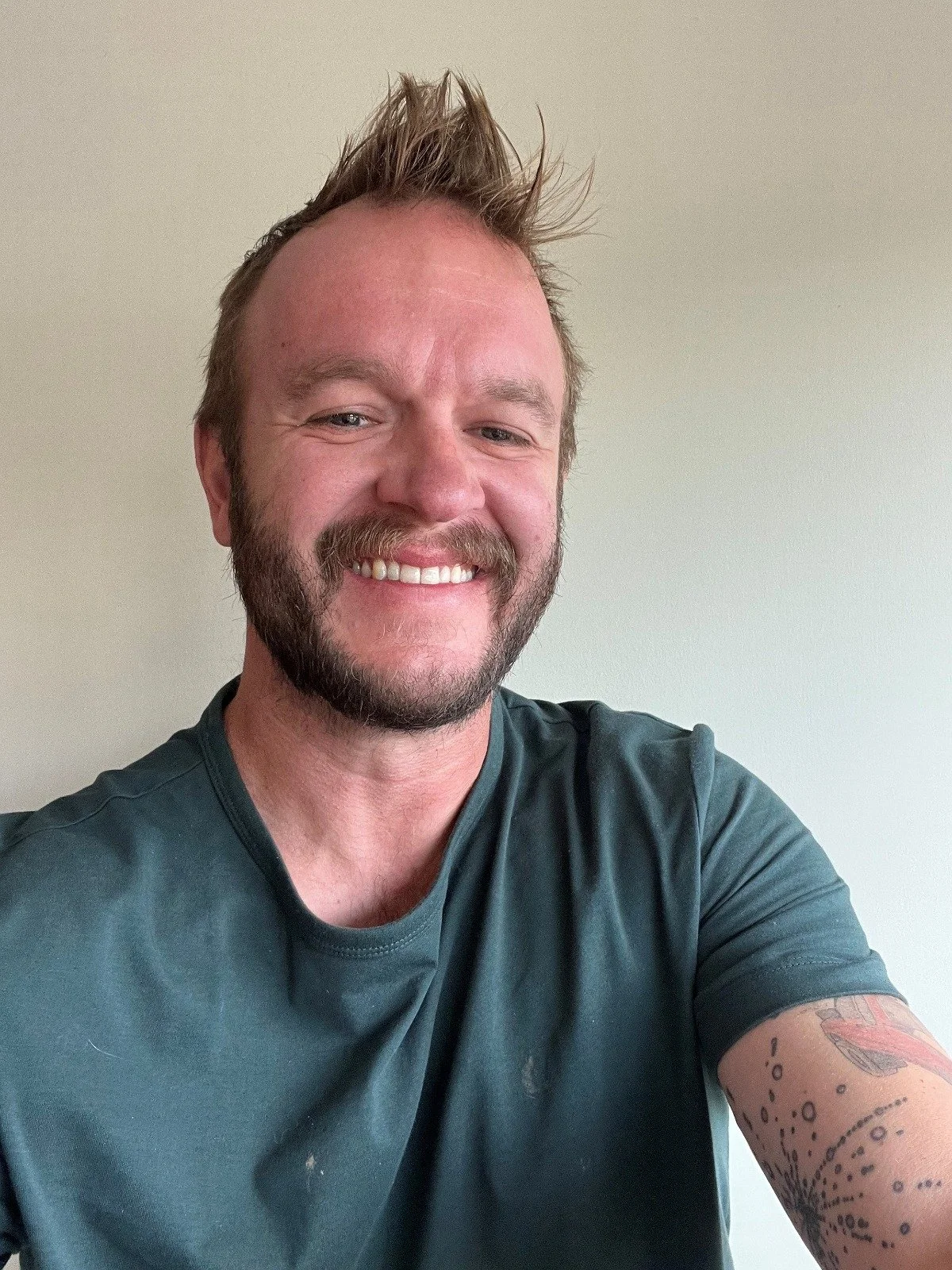








Pronouns: He/Him
Licensure: Therapist Intern
Location: Colorado
Languages: English
Accepting New Clients: Yes
Sliding Scale: To be confirmed
Insurance: To be confirmed
About Isaac
Hi everyone, my name is Isaac. I live in the mountains outside of Lyons, Colorado, I am a songwriter, musician, handyman, social worker, community organizer, and dog dad. I love therapy and creating safe spaces to explore the complex nuances of our big beautiful and complex lives.
My intention in such therapeutic processes is to create a space to slow down, become more curious, and practice understanding the stories we tell ourselves about ourselves, about our relationships, and our lives.
My clinical experience includes working in residential treatment with adolescents who have experienced significant trauma and complex life circumstances. This work taught me the importance of patience, creating authentic connection, and fostering a therapeutic relationship where people feel seen and understood, especially when life feels chaotic and overwhelming. I bring such a perspective to my work with clients of all ages, identities, and backgrounds, especially male identifying clients dealing with all the complex issues that face men today.
I'm interested in helping people who feel stuck in patterns of anxiety, relationships, identity, and self-worth. I draw from existential therapy, attachment theory, and mindfulness practices, including Zen meditation, when they fit the person and their goals.
I don’t believe therapy is about “fixing” you, rather, it’s about creating a space where you can develop a deeper understanding of yourself, recognize the patterns that may be holding you back, and discover greater freedom in how you respond to life. I strive to bring warmth, curiosity, and authenticity to that process.


Specialties
Trauma informed care
Substance use
Men’s issues

Areas of Focus
Anxiety
Relationships
Identity
Self-worth
Feeling stuck in recurring patterns

Modalities
Existential therapy
Attachment theory
Mindfulness practices
Zen meditation

Lived Experience
and Perspective
Zen Buddhist practice and psychology
Musician
Songwriter
Community organizer
Handyman
Social worker
Dog dad
Why I Do This Work
I’ve had a lot of different kinds of work in my life. I’m a social worker, but I’m also a musician, songwriter, handyman, and community organizer. Those parts of my life probably have more to do with how I practice therapy than they might seem to at first.
They’ve taught me to pay attention. To listen for what is underneath the obvious thing. To notice how people build lives, relationships, identities, and ways of getting through difficult circumstances with whatever materials were available to them.
Before coming to Phoenix Rising, I worked in residential treatment with adolescents living through significant trauma and complicated life circumstances. Being with people in those moments taught me that you cannot rush trust. It also taught me how little sense a person’s behavior makes when you remove it from the conditions they have been surviving.
I carry that with me now, especially in my work with men.
There are a lot of messages about what men are supposed to tolerate quietly, how much they should be able to handle on their own, which emotions are acceptable, what strength should look like, and what it means to need other people. Race, class, sexuality, work, family, religion, disability, and culture complicate those messages even further.
I’m interested in making room for the parts of people’s lives that do not fit neatly into “symptoms.”
Therapy, for me, is a place where we can slow things down enough to get curious about the life underneath the pattern.
- Isaac Nemcek-Kranz
My Approach in Practice

I don’t think people need another person telling them what is wrong with them.
Usually, I want to know how something came to make sense.
If you shut down during conflict, what happened in relationships where being emotionally open carried a cost? If you feel responsible for keeping everything together, when did usefulness become tied to belonging? If anger arrives faster than vulnerability, what did you learn about which emotions were safer to show?
That does not mean every struggle has some hidden trauma explanation. Life is more complicated than that.
But behavior happens inside relationships, families, workplaces, communities, economic conditions, gender expectations, and histories. I don’t want to pull someone out of all of that context and then treat their response as though it appeared spontaneously inside them.
My work draws from existential therapy, attachment theory, mindfulness, and Zen practice. I use those ideas when they are useful, not because I expect somebody’s life to fit neatly inside a framework.
Sometimes we may look closely at a relationship pattern. We may sit with a question that does not have an immediate answer. We might notice the story you have been carrying about who you are and ask whether it is actually yours, or whether parts of it were handed to you a long time ago.
I tend to be warm and pretty straightforward. I’m comfortable with complexity, silence, humor, uncertainty, and the fact that therapy does not always move in a straight line.
I’m not trying to turn you into a more acceptable version of yourself.
I want us to understand what has been shaping your life well enough that you have more freedom in deciding what happens next.
What Clients Often Come to Me For
People often reach out when life feels heavy, layered, or difficult to put into words.
Men Who Don’t Have Many Places to Talk Honestly
A lot of men have learned how to be useful, capable, funny, productive, or dependable without having many places where they can be uncertain, scared, lonely, hurt, or confused.
Therapy can be somewhere we look at what masculinity has asked of you, what it has protected, what it has cost, and what kind of man you actually want to be.
Trauma & Life That Has Felt Chaotic
My background includes residential work with adolescents who experienced significant trauma and complicated life circumstances.
I’m interested in what happens after survival becomes a way of moving through the world: staying guarded, expecting things to fall apart, feeling responsible for everything, disconnecting, getting angry quickly, or struggling to trust people even when you want closeness.
Relationships That Keep Finding the Same Painful Places
Maybe the relationship changes, but the argument feels strangely familiar.
We can look at attachment, conflict, intimacy, boundaries, fear of losing people, difficulty relying on others, or the patterns that keep appearing when closeness starts to matter.
Anxiety, Self-Worth & Feeling Stuck
Sometimes there is no dramatic crisis. You just keep finding yourself in a version of life that no longer fits.
Anxiety, self-doubt, overthinking, feeling directionless, or knowing what you “should” do without feeling able to move can become places to slow down rather than immediately push through.
Identity, Meaning & Big Life Questions
Who am I when I am not doing what everyone expects of me?
What do I actually value? What kind of relationships do I want? What happens when the life I built stops making sense?
My existential approach makes room for questions about identity, purpose, mortality, belonging, spirituality, work, creativity, and the strange experience of being a person trying to make a life among other people.
Substance Use & Other Ways of Getting Through
I’m less interested in starting from Why are you doing this to yourself?
I want to understand what alcohol, substances, avoidance, work, isolation, or another coping strategy has been helping someone manage.
We can take the harm seriously without losing curiosity about why the strategy became useful in the first place.
Our work focuses on making sense of what you have lived through while supporting you in building clarity, resilience, and self-trust in ways that fit your life and values.