

When Leadership Turns Combative: How This Administration’s Rhetoric and ICE Policies Ripple Through Minority and LGBTQ+ Communities
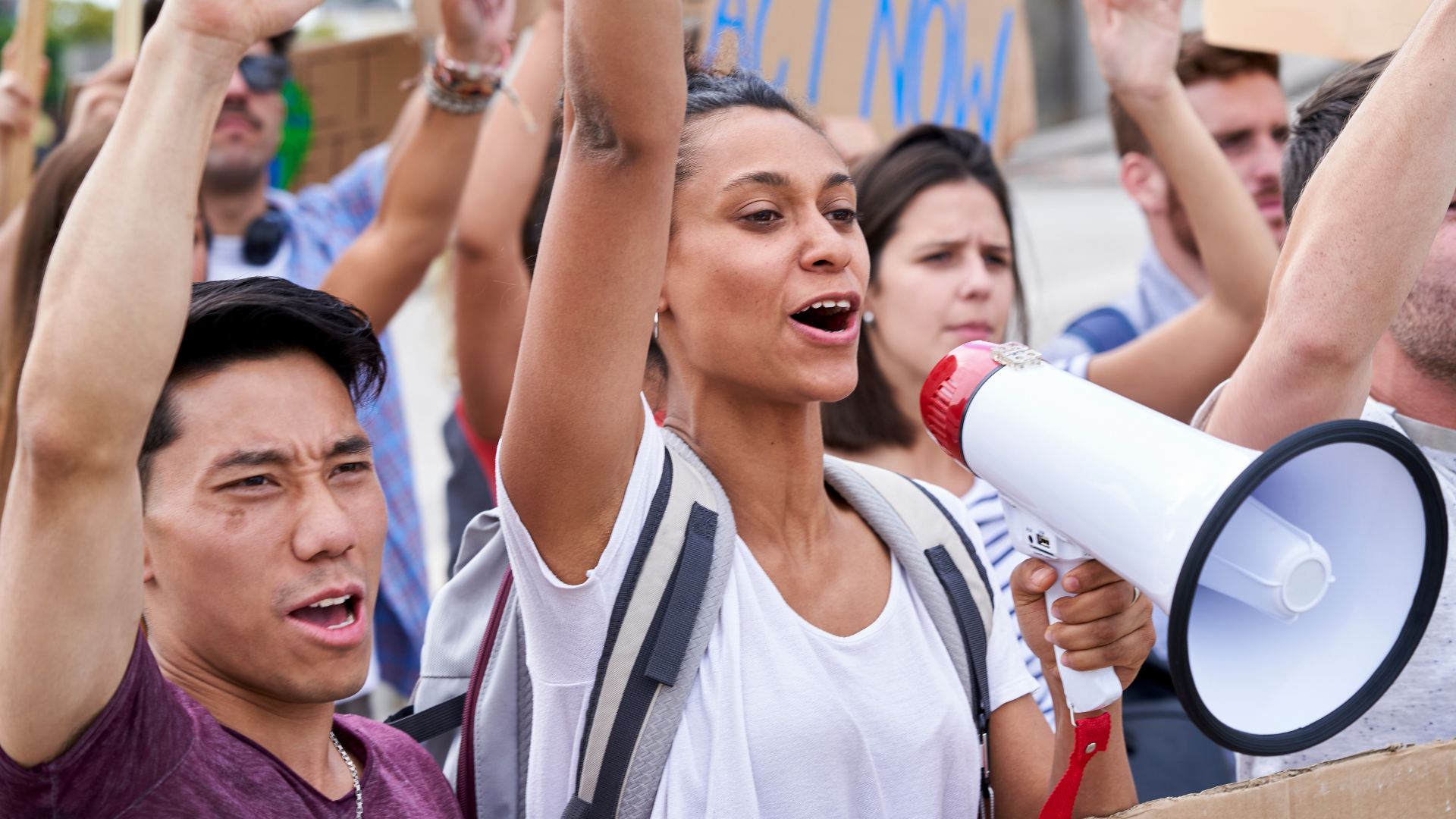
The United States is living through a moment defined by tension; political, cultural, and interpersonal. Under the current administration, federal agencies like ICE have been empowered with broader discretion, more aggressive enforcement priorities, and a public narrative that frames “law and order” as a battle against internal enemies. Many people see this as a return to policies that disproportionately target immigrants, communities of color, and LGBTQ+ individuals.
But the story isn’t just about policy. It’s about the climate those policies create.
A Government That Governs Through Conflict
This administration has leaned heavily into combative messaging,portraying dissent as disloyalty, civil rights protections as “reverse discrimination,” and diversity initiatives as threats to national identity. Critics argue that this framing doesn’t just shape policy; it shapes public behavior.
When leaders normalize hostility, the public often follows.
Sociologists have long documented that political rhetoric can influence rates of hate crimes, discrimination, and interpersonal aggression. When the government signals that certain groups are suspect, “un-American,” or undeserving of protection, it emboldens people who already hold prejudiced views.
ICE as a Symbol of Fear
Immigration and Customs Enforcement (ICE) has become one of the most visible tools of this shift. Reports from civil rights organizations describe increased raids, expanded surveillance, and a willingness to use force that has drawn national scrutiny. High-profile cases, such as the death of Renee Nicole Good during an ICE operation, which federal officials are still investigating. or the murder of Alex Pretti. These situation have intensified concerns about accountability and oversight.
For many immigrant families, ICE is not just a federal agency. It’s a symbol of unpredictability, fear, and the possibility of sudden loss.
And that fear doesn’t stay contained within immigrant communities.
The Ripple Effect on Minorities and LGBTQ+ People
When one marginalized group is targeted, others feel the shockwaves. It’s inevitable. Communities of color, queer and trans people, and religious minorities often share overlapping experiences with state surveillance, discrimination, and public hostility. A combative political climate amplifies these stressors.
1. Increased Social Hostility
When leaders frame certain groups as threats, everyday interactions become more dangerous. People report more harassment, more slurs, more “go back where you came from” moments. LGBTQ+ individuals,especially trans people often experience this hostility at the intersection of multiple identities.
2. Mental Health Strain
Clinicians across the country have noted spikes in anxiety, hypervigilance, and trauma responses among clients who feel targeted by political rhetoric. The constant threat real or perceived creates chronic stress that affects sleep, relationships, and overall well‑being.
3. Reduced Access to Services
Fear of government systems leads many immigrants and LGBTQ+ individuals to avoid hospitals, schools, and social services. When people believe that any interaction could expose them to surveillance or discrimination, they retreat from the very institutions meant to support them.
4. Community Fragmentation
A combative national tone encourages people to turn inward, distrust neighbors, and disengage from civic life. This weakens community networks that minorities and LGBTQ+ people rely on for safety and solidarity.
Why This Moment Matters...
Some people argue that the administration’s approach is about restoring order or protecting certain groups from “reverse discrimination.” Others see it as a rollback of decades of civil rights progress. Regardless of political interpretation, the lived reality is clear: when the government adopts an adversarial posture, marginalized communities bear the brunt of the fallout.
And when fear becomes normalized, democracy becomes fragile.
What Communities Are Doing to Push Back
Despite the challenges, communities are responding with resilience:
Mutual aid networks supporting immigrant families
LGBTQ+ organizations offering legal and mental health resources
Faith groups providing sanctuary and advocacy
Social workers, clinicians, and community leaders creating safe spaces for healing and empowerment
People are refusing to let fear define their futures.
A Call to Awareness & Action
This moment demands more than observation. It requires awareness, solidarity, and a willingness to challenge narratives that pit Americans against one another. Whether through voting, advocacy, community organizing, or simply refusing to dehumanize others, each person has a role to play.
Because the real question isn’t just what this administration is doing it’s what kind of country we’re becoming in response.
Historical Patterns: How State Violence and Hostile Governance Shape Collective Trauma
Across history, marginalized communities have carried the psychological weight of government‑driven hostility. Whether through discriminatory laws, surveillance, forced displacement, or targeted policing, these actions create chronic stress environments that fundamentally alter how people relate to safety, identity, and belonging.
Collective Trauma Is Not New
Jewish communities after the Holocaust
Black Americans after centuries of enslavement, Jim Crow, and racial terror
Indigenous communities after colonization and forced assimilation
Japanese Americans incarcerated during WWII
LGBTQ+ communities during the AIDS crisis and decades of criminalization
Immigrant communities facing raids, deportations, and family separation
In each case, the pattern is consistent: when a government treats a population as a threat, the trauma becomes woven into the community’s psyche.
The Science: Chronic Stress and PTSD in Oppressed Communities
Research across psychology, sociology, and public health shows that living under constant threat whether from police, immigration enforcement, or discriminatory laws produces trauma responses similar to those seen in war zones.
The key findings::
1. Chronic Stress Alters the Brain
Studies published in The American Journal of Psychiatry and Nature Neuroscience show that prolonged exposure to fear and unpredictability changes the amygdala, hippocampus, and prefrontal cortex areas involved in memory, emotional regulation, and threat detection.
2. State Violence Produces PTSD‑Like Symptoms
Research on Holocaust survivors, Japanese American internees, and Black Americans living under racial terror demonstrates:
hypervigilance
distrust of institutions
identity suppression
intergenerational trauma transmission
These findings come from sources such as The Journal of Traumatic Stress, The Lancet, and the work of Dr. Rachel Yehuda, a leading trauma researcher.
3. Immigration Enforcement Creates Measurable Mental Health Harm
Studies from:
The American Psychological Association (APA)
The National Academies of Sciences, Engineering, and Medicine
The Journal of Ethnic & Migration Studies
Show that aggressive immigration enforcement correlates with:
increased PTSD symptoms
anxiety and depression
school avoidance among children
community‑wide fear and social withdrawal
4. LGBTQ+ Communities Show Similar Trauma Patterns
Decades of criminalization, discrimination, and targeted policing have produced elevated rates of:
complex PTSD
minority stress
suicidality
chronic hypervigilance
These findings are documented in The American Journal of Public Health, Psychological Bulletin, and research by Dr. Ilan Meyer (Minority Stress Theory).
Historical Parallels Without Equating Experiences
You mentioned Jewish communities under Nazi persecution. While each historical event is unique, scholars agree on this: the psychological mechanisms of oppression are consistent across contexts.
The relevant parallel is not the scale of atrocity, but the pattern:
A government labels a group as dangerous
Public hostility increases
Surveillance and policing intensify
Communities internalize fear
Trauma becomes generational
This pattern is supported by research from the United States Holocaust Memorial Museum, Yale’s Genocide Studies Program, and Harvard’s Center for the Study of World Religions.
References
Trauma & Oppression
Yehuda, R. (2015). Intergenerational transmission of trauma effects. American Journal of Psychiatry.
Kellermann, N. (2001). Transmission of Holocaust trauma. Journal of Traumatic Stress.
Comas‑Díaz, L., Hall, G., & Neville, H. (2019). Racial trauma: Theory, research, and healing. American Psychologist.
Immigration Enforcement & Mental Health
American Psychological Association. The impact of immigration enforcement on mental health.
National Academies of Sciences. The Integration of Immigrants into American Society.
Hagan, J., et al. (2011). The effects of immigration raids on Latino communities. Journal of Ethnic & Migration Studies.
LGBTQ+ Trauma & Minority Stress
Meyer, I. (2003). Prejudice, social stress, and mental health in LGBTQ populations. Psychological Bulletin.
Hatzenbuehler, M. (2014). Structural stigma and health. American Journal of Public Health.
Collective Trauma & State Violence
Hirschberger, G. (2018). Collective trauma and the social construction of meaning. Frontiers in Psychology.
Alexander, J. (2004). Toward a theory of cultural trauma. University of California Press.